Coloma
The 1849 rush beside the American River, where money starts buying ground.
- Unlocks
- At 1,000 lifetime recovered value
- The verb
- Sluice and blast
- Your tools
- Detector, pickaxe, sluice box and dynamite
- Buried loot
- Around 2,000 buried items, worth about 16,100 together
- Signature find
- Six mine trophies, one per claim
What it feels like
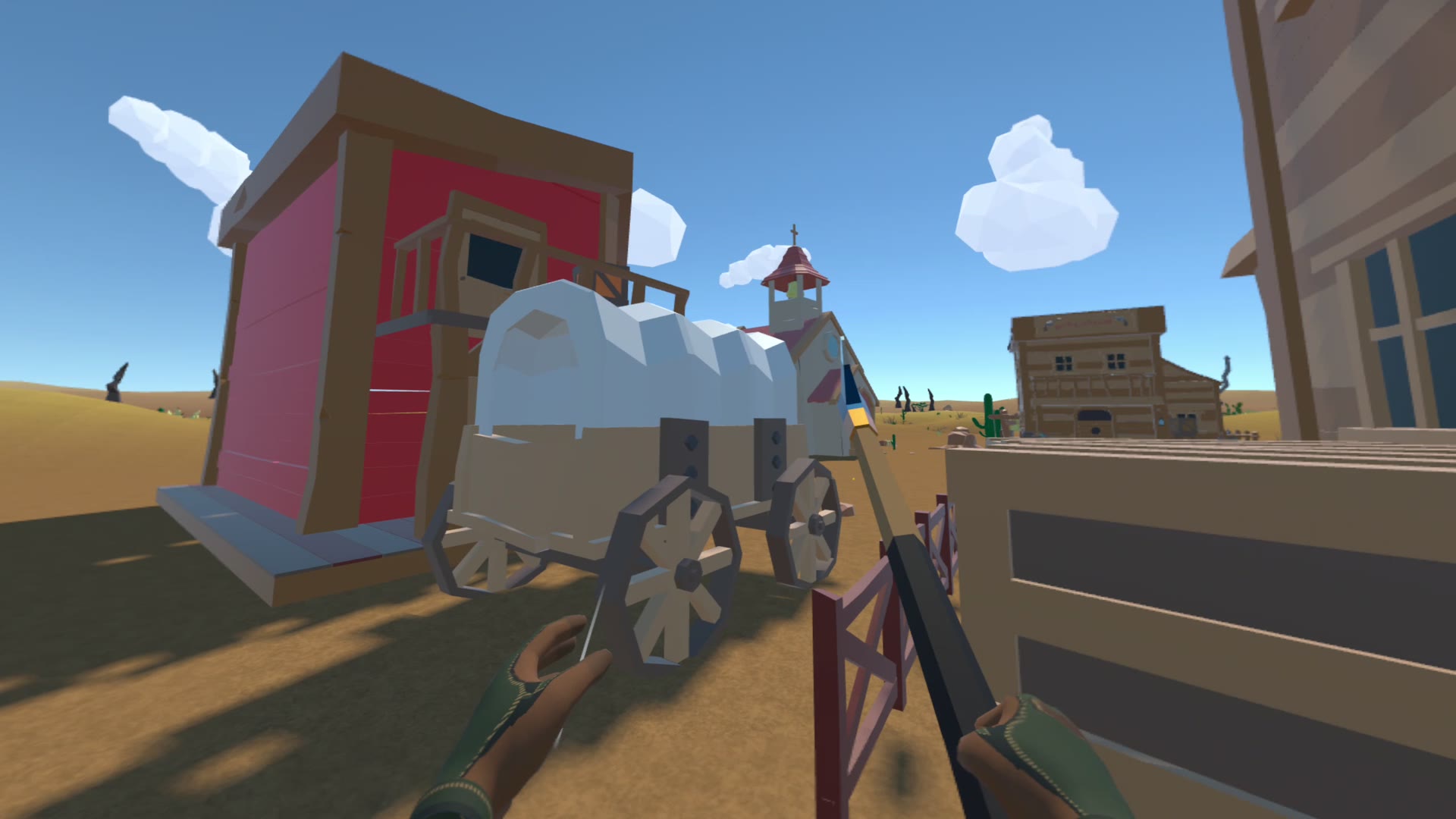
A ’49er camp at the place where the whole thing started. A hand-placed town on the flat, open country beyond it, and the river doing the work. Where Ballarat is about learning, Coloma is about output: this is the destination where the river gets a machine, and where money starts buying access to ground.
The expedition: Claims and dynamite
A Miners’ Notice board stands in the camp, listing six mines by name with a price against each. Coloma’s expedition is about deciding which of them is worth the powder.
- Buy a claim — The names carry the place: Dead Mule Shaft, Widow’s Luck, Sutter’s Folly, Rattlesnake Drift, Bonanza Hole, Last Chance Diggings. Claims run from $250 to $500.
- Buy powder — Dynamite is sold at Coloma and nowhere else, $75 a stick, and only while you hold an unblasted claim. The stick appears floating in front of you wherever you happen to be standing. Dropped, it hovers rather than rolling away.
- Blast it — Carry the stick out to the claimed mine, set it in the blast socket, light the fuse and retreat. The mine comes down, the debris bounces and clears, and a named trophy rises out of the dust with a card that says what it is, plus a scatter of gold around it.
Six trophies, one per mine and once per profile, each a small story on its own: a dented brass pack-bell with a torn strap from Dead Mule Shaft; a silver mourning locket with woven hair behind glass from Widow’s Luck; a hand-stamped sawmill maker’s plate from Sutter’s Folly; a snake rattle capped in worked silver from Rattlesnake Drift; native gold threading white quartz from Bonanza Hole; and a folding brass assayer’s balance from Last Chance Diggings. Blasting is deliberately a cash loss and a progression gain — it speeds a world up rather than clearing it.
On the side
Sluicing
The sluice box is sold here and only here, $200, bought once. It seats itself in the river, hopper upstream, and does the work you would otherwise do by hand in a pan. Shovel dirt into the hopper, let the river run through it, and pick up what drops at the discharge. Easier and more productive than panning, by design.
Panning
Works here too, if you bought the kit at Ballarat.
Free prospecting
Around two thousand buried items across the camp and the river flats, worth roughly 16,100 in all.
The real place
James Marshall found gold in the tailrace of Sutter’s sawmill at Coloma in January 1848, and the California Gold Rush followed. The place and its history are real. The mine names and the people you meet are not.