How Buried Worlds VR works
The cycle every destination shares, the hub between them, and the order the world opens in.
The cycle
Every world runs the same five beats underneath its own story.
- Detect — Sweep the metal detector. It reads the nearest buried thing and shows the signal on a real-detector-style faceplate, with a target scale where gold and lead overlap. A strong reading is never a promise.
- Recover — Usually: strike with the pickaxe until the find surfaces and rises to eye level. Each world changes this — panning and a machine at Ballarat, a sluice at Coloma, a fishing magnet at Carcassonne, a cleaning brush at Hoxne, a hand scoop at Bolonia.
- Stow — Bring the find to your chest. That is what banks it. Selling moves value into cash later, but your lifetime tally only ever goes up.
- Spend — The marketplace opens from your wrist anywhere. Buy the tools, permits and consumables that open the next kind of ground.
- Travel — Lifetime recovered value unlocks the next destination. Locked cards on the travel screen show a progress bar toward their threshold.
On top of the cycle, each world carries one authored expedition: a clue, some promising ground, a few key finds, a physical task done with your hands, a world that visibly changes, and a signature treasure at the end.
The travel hub
The hub is the only route between worlds and where every session begins. Three save slots, each showing its own name and lifetime value — or New Prospector if empty. Then a grid of destination cards with artwork and, where relevant, a Traditional Country acknowledgement. Locked cards carry a progress bar. From 250 lifetime value onward an Achievements card sits beside them and opens a completion screen: one row per world, showing how much of that world’s buried value this profile has recovered.
Unlock order
| Order | Destination | Lifetime value needed |
|---|---|---|
| 1 | Ballarat | Open from the start |
| 2 | Coloma | 1,000 |
| 3 | Carcassonne | 5,000 |
| 4 | Hoxne | 8,000 |
| 5 | Bolonia | 12,500 |
Ballarat alone holds around 12,900 in buried value, and its river panning is repeatable forever — so it can fund the entire map by itself, given time. Nothing forces you onward before you want to go.
What each place changes
- Ballarat, AustraliaPan and puddle. Open from the start.
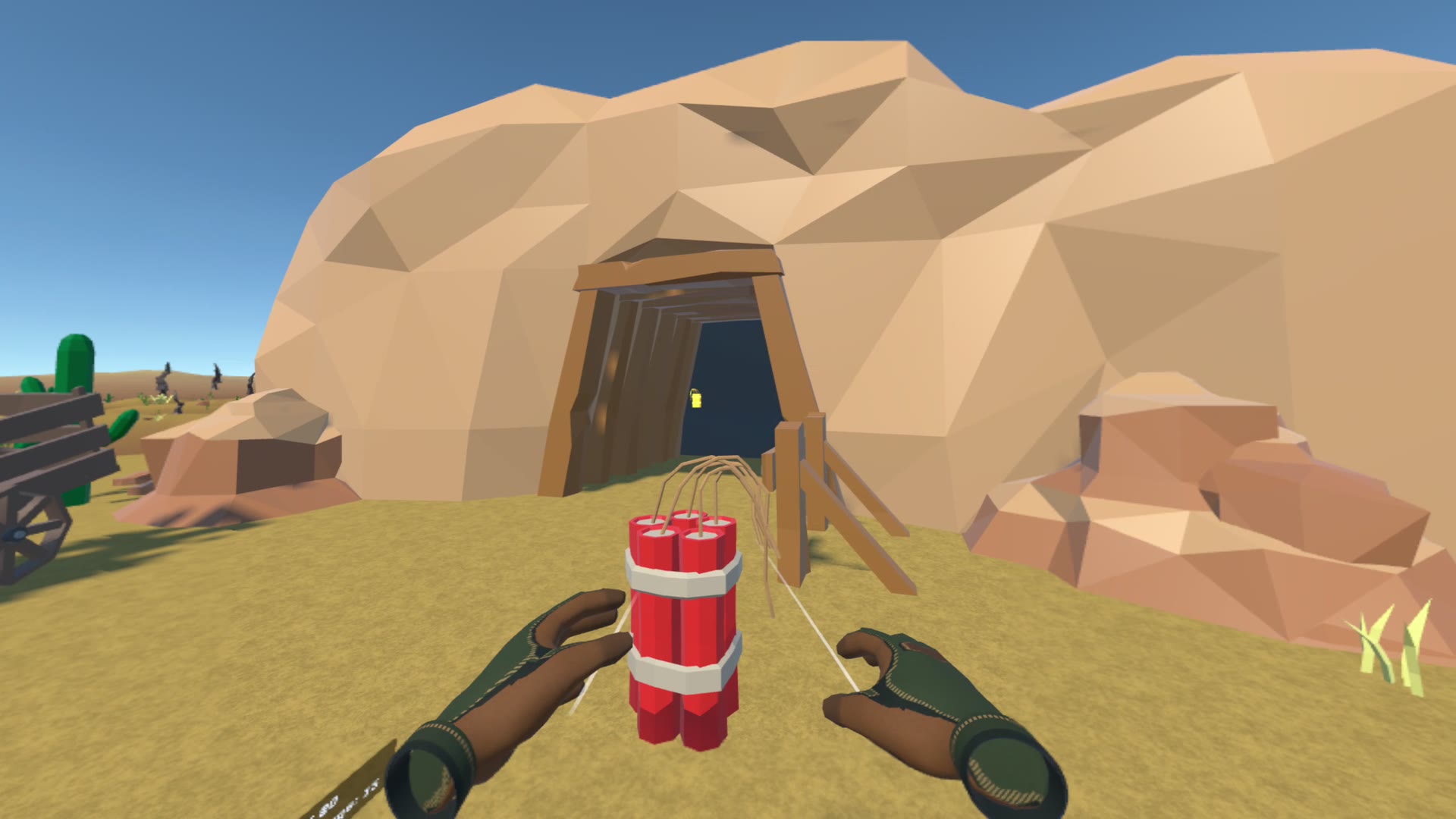
- Coloma, CaliforniaSluice and blast. Unlocks at 1,000.
- Carcassonne, FranceFish the wells. Unlocks at 5,000.
- Hoxne, SuffolkBrush the block. Unlocks at 8,000.
- Bolonia, SpainScoop the sand. Unlocks at 12,500.
The beer can
A hidden reward for looking where nobody told you to look. Somewhere in each world there is a beer can. Grab it and stow it at your chest like ordinary loot, and your digging tool swells to three times its size: its next strike unearths every buried item within fifteen metres. One use, once per profile, and it arms whatever that world digs with — which is why it also works on a beach with no pickaxe. Whether to clear a patch by hand first is the gamble.
Small things that help
- The stow gesture — find to chest — is what banks a find. Dropping it does not.
- The gold pan and shovel are sold only at Ballarat; the sluice only at Coloma; dynamite only at Coloma while you hold an unblasted claim; the cleaning brush only at Hoxne.
- Everything the magnet pulls out of a Carcassonne well is worthless except the seven plaques. That is on purpose.
- Getting stuck is not a failure state. Go back to Ballarat, pan for a while, come back.
Read next
- Comfort and seated playWhat the Moderate rating means here.
- Questions before buyingDevices, price, languages, saves.