Press kit
Everything needed to write about Buried Worlds VR without emailing anyone first. Screenshots, art and the trailer are free to use in coverage.
Fact sheet
- Title
- Buried Worlds VR
- Store listing
- Titled Buried Worlds on the store — the same game
- Platform
- Meta Horizon Store — Quest 2, Quest 3, Quest 3S and Quest Pro
- Price
- US$14.99 (Meta shows local currency by region)
- Released
- 26 August 2026, in Early Access
- Developer
- Cyril Gaillard, working alone
- Studio
- Bellare Studios (Melvia Pty Ltd), Victoria, Australia
- Built with
- Unity 6, URP, OpenXR and the Meta XR SDK
- Genres
- Adventure, Simulation · single player, no combat
- Languages
- English and French
- Comfort
- Moderate · Seated or standing · teleport or free movement
- Rating
- IARC 13+
- Download size
- 462 MB
- Internet
- Not required once installed
- Website
- buriedworlds.com
Descriptions
Take these as they are — no attribution needed, no need to reword.
A VR treasure-hunting game built around the oldest thrill there is: the moment the ground gives something up.
Buried Worlds VR is a VR treasure-hunting game for Meta Quest. No combat and no timers — just a metal detector, a signal climbing, and a patch of dirt that might be hiding a coin, a nugget, or nothing at all. Every tool is worked by hand: sweep the coil, drive the pickaxe, swirl a pan of river gravel until something bright settles at the bottom. Five expeditions, each drawn from a real place where real treasure was found. Built alone, over two years, by a developer in regional Victoria who took a gold prospecting course and never quite got over it.
Somewhere under your feet, something has been waiting a long time.
Buried Worlds VR is a VR treasure-hunting game built around the oldest thrill there is: the moment the ground gives something up. No combat, no timers. Just a detector in your hand, a signal climbing, and a patch of dirt that might be hiding a coin, a nugget, or nothing at all.
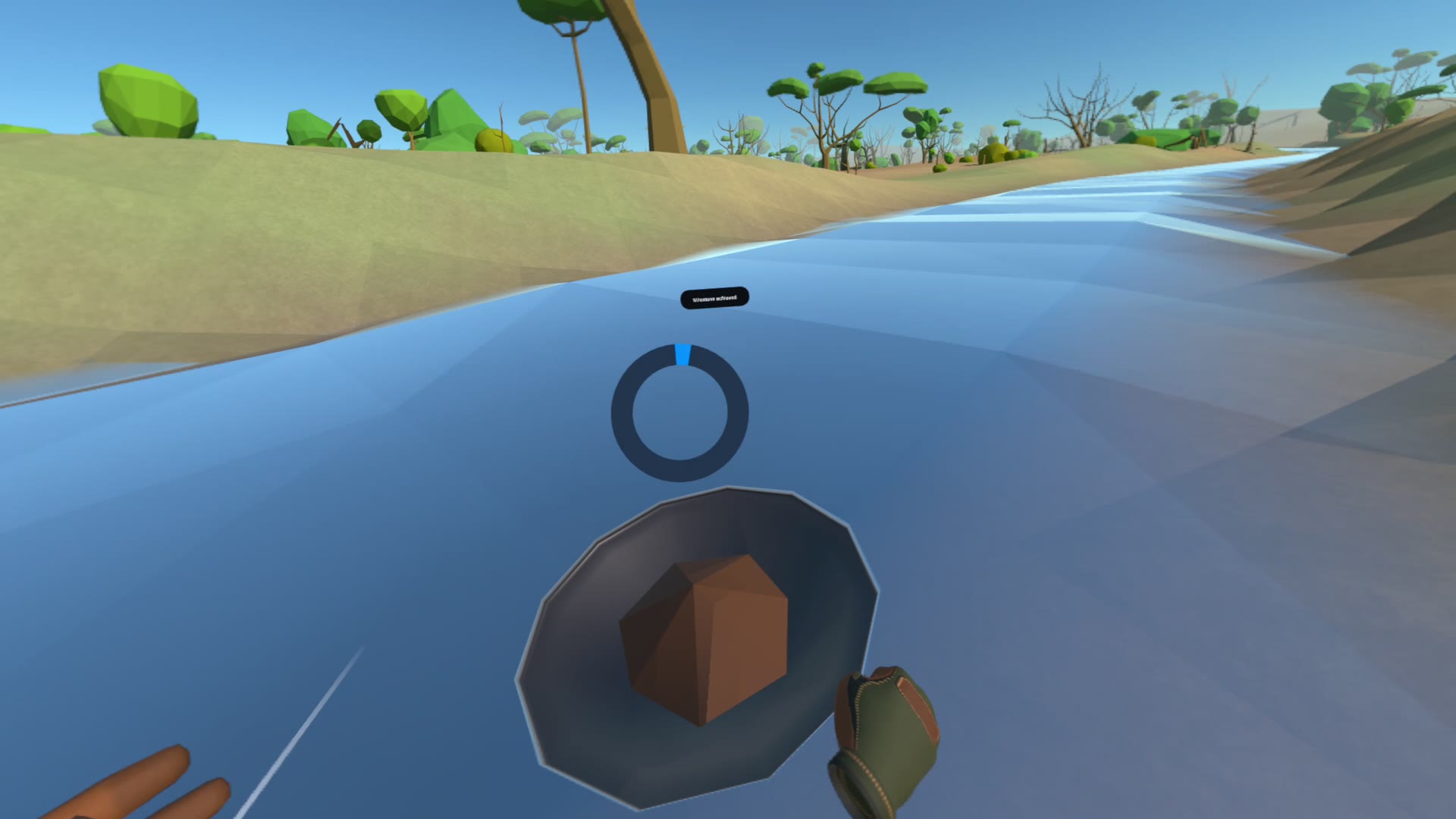
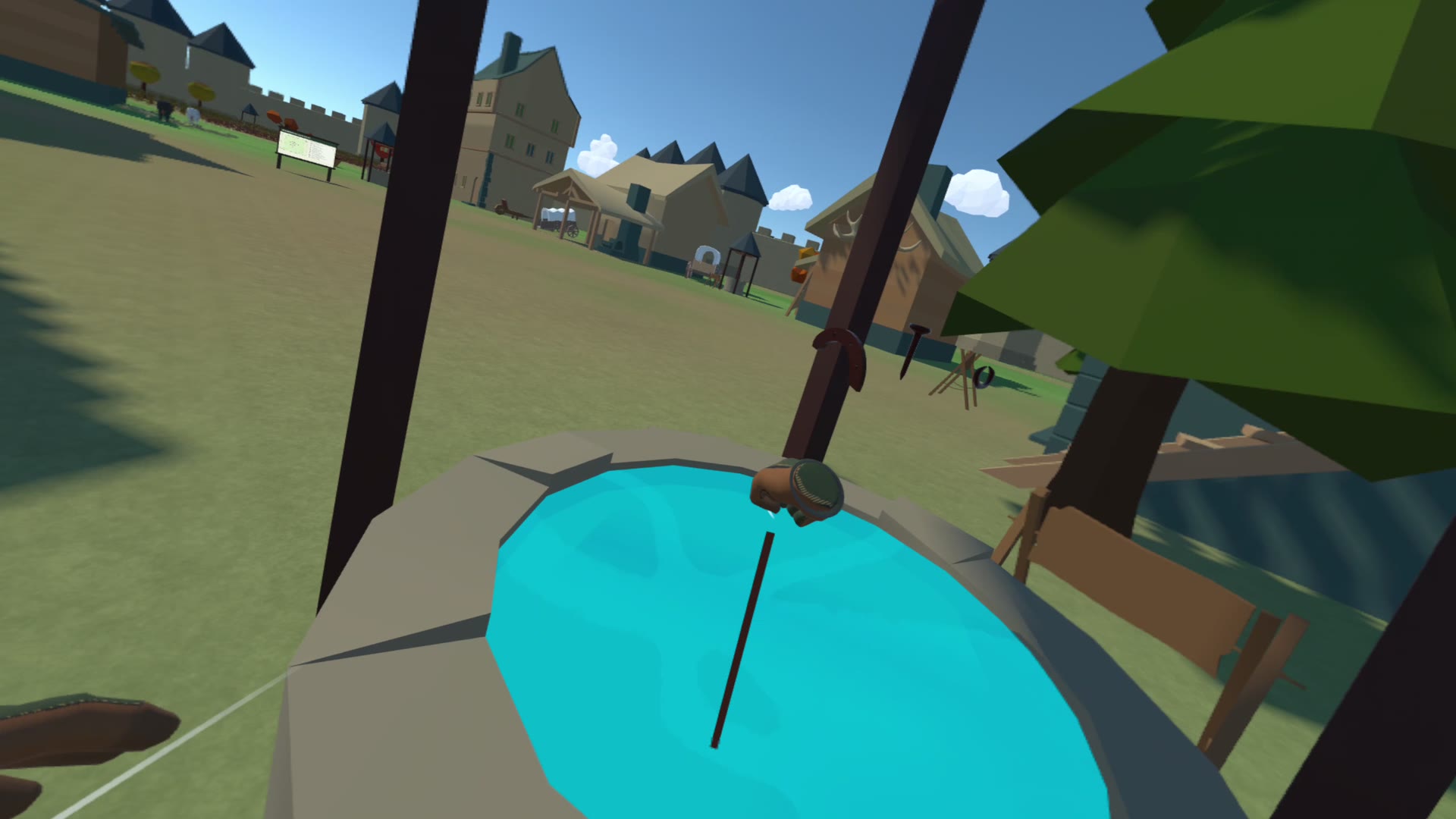
Every tool is worked with your own hands. Sweep the coil low and listen for the tone to rise. Drive the pickaxe into the spot you marked. Load a pan with river gravel and swirl it, again and again, until the silt washes away and something bright settles at the bottom. Sift sand, fish flooded wells with a magnet, and brush the dirt from finds too fragile to strike.
Sell what you recover, upgrade your kit, and earn your way to the next destination. Play seated or standing, teleport or move freely, with comfort options that stay out of your way.
Bring patience. The ground rewards it.
The five expeditions
Every destination is a real place where treasure was actually found. Each carries its in-game expedition name.
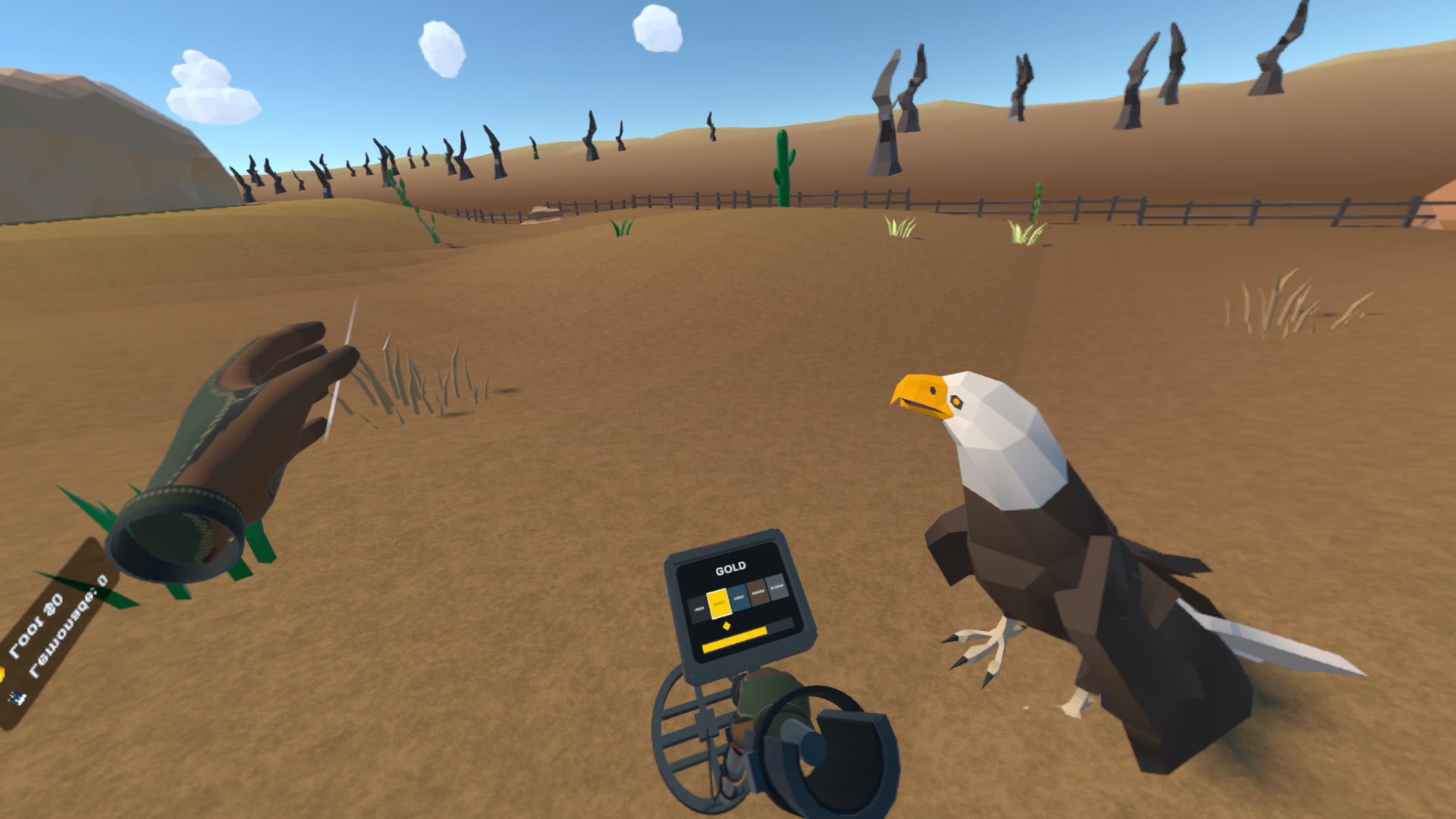
The Victorian diggings that drew the world to Australia, and where the expedition begins.
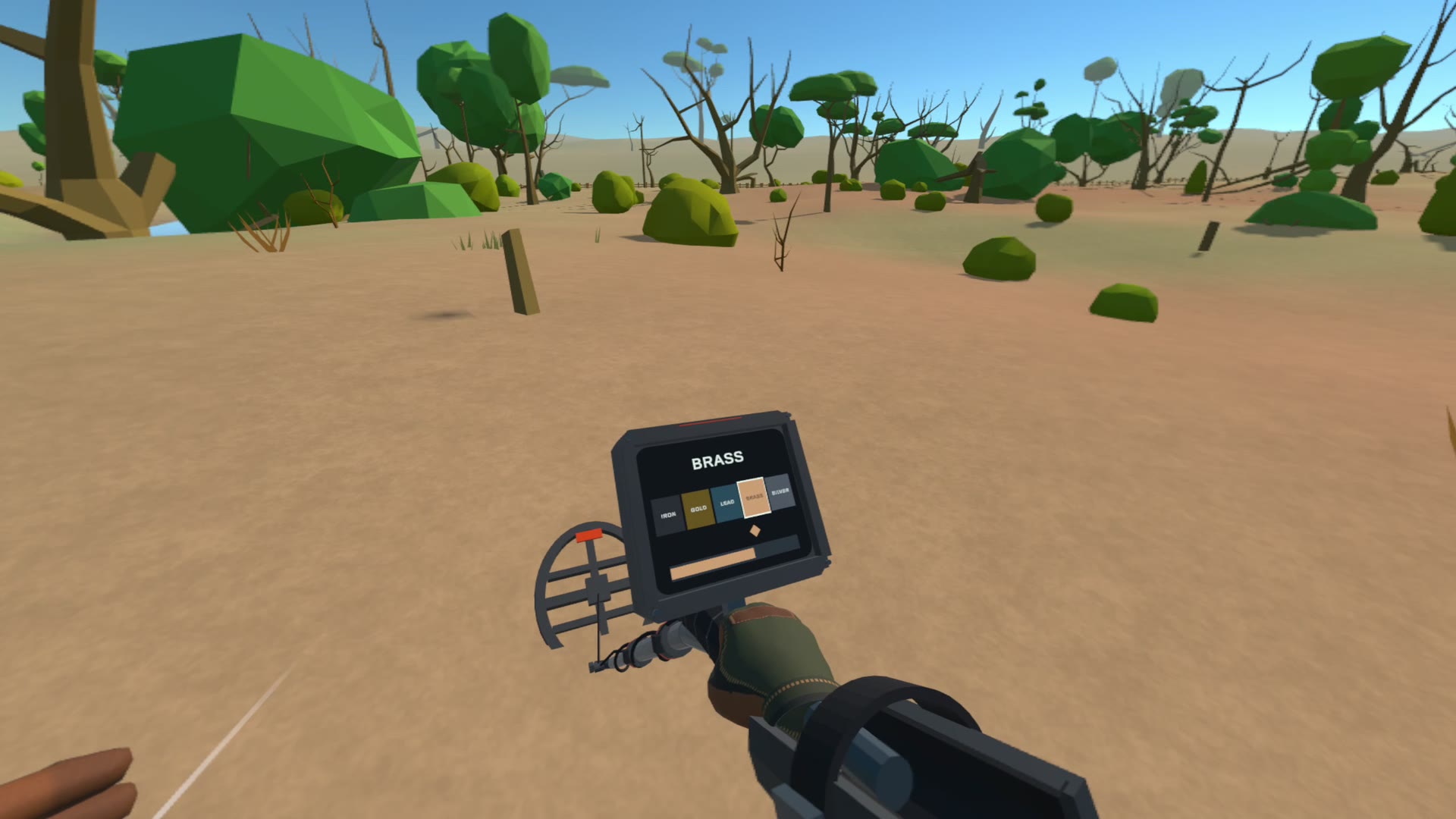
The 1850s Victorian gold rush. The game opens here with the basic detector — a bare strength bar that tells you something is there and nothing more about what.
The American River strike that started it all.
James Marshall found gold at Sutter’s Mill in January 1848, the find that started the California Gold Rush. Coloma is where the better detector appears, with a real target ID scale.
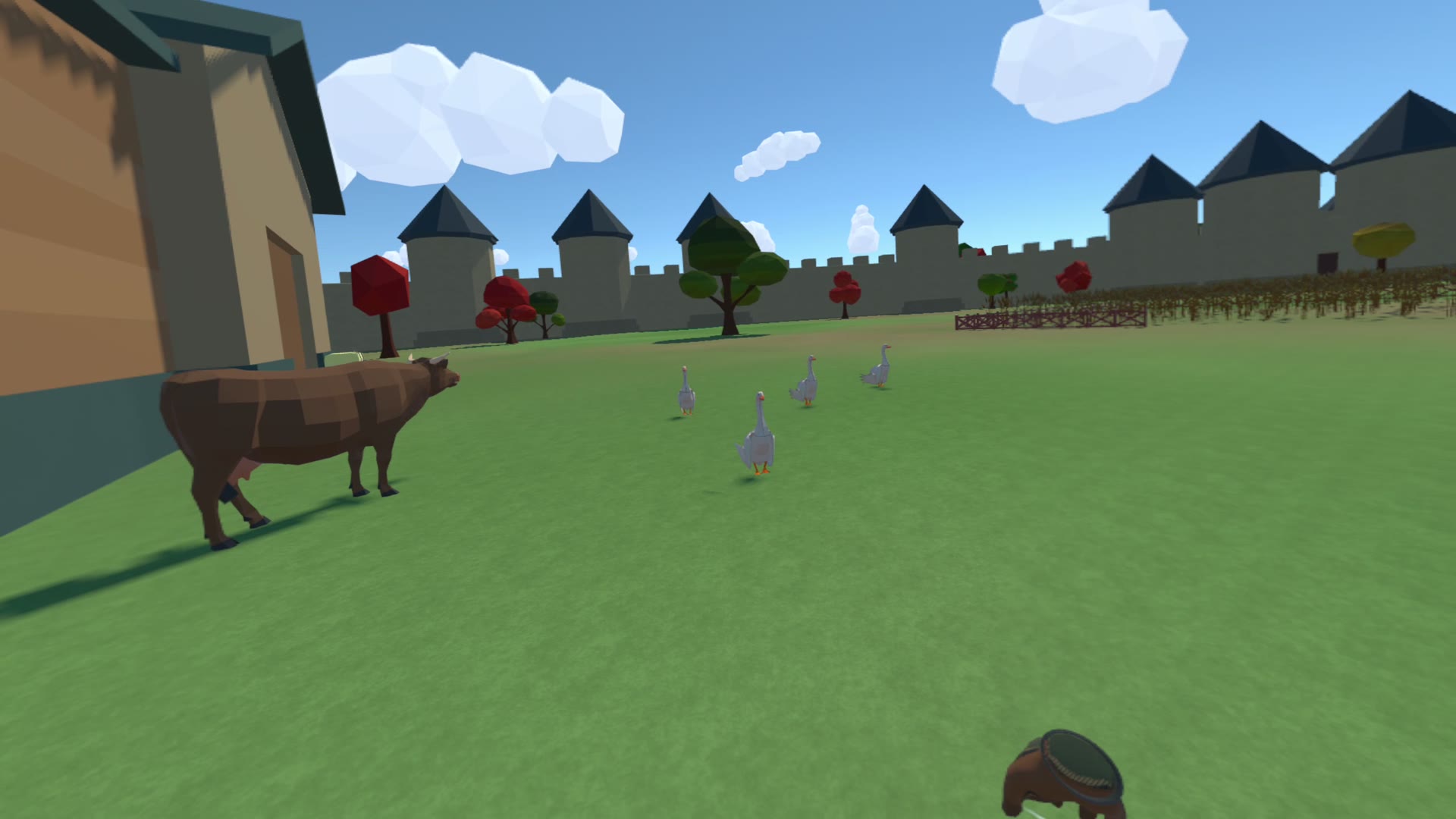
Coin hoards beneath a walled hilltop city, a locked chest and a missing key.
The fortified city has been UNESCO-listed since 1997. Its wells are fished with a magnet rather than dug.
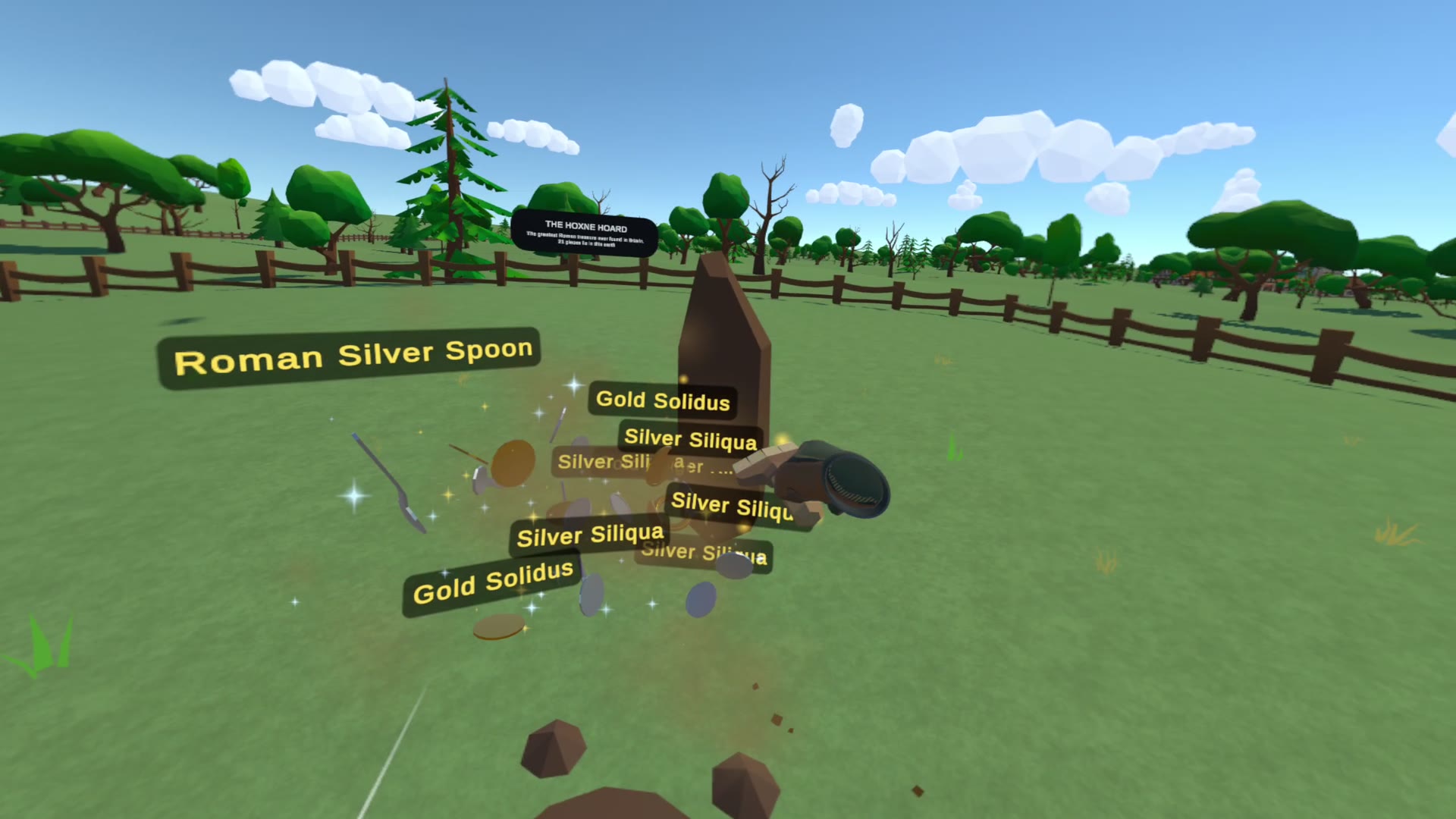
A Suffolk field holding the largest Roman hoard ever found in Britain.
In 1992 Eric Lawes went looking for a hammer his tenant farmer, Peter Whatling, had lost in the field, and found the Hoxne Hoard. The hammer was recovered too, and sits with the hoard in the British Museum, Room 49. The game recreates the hammer.
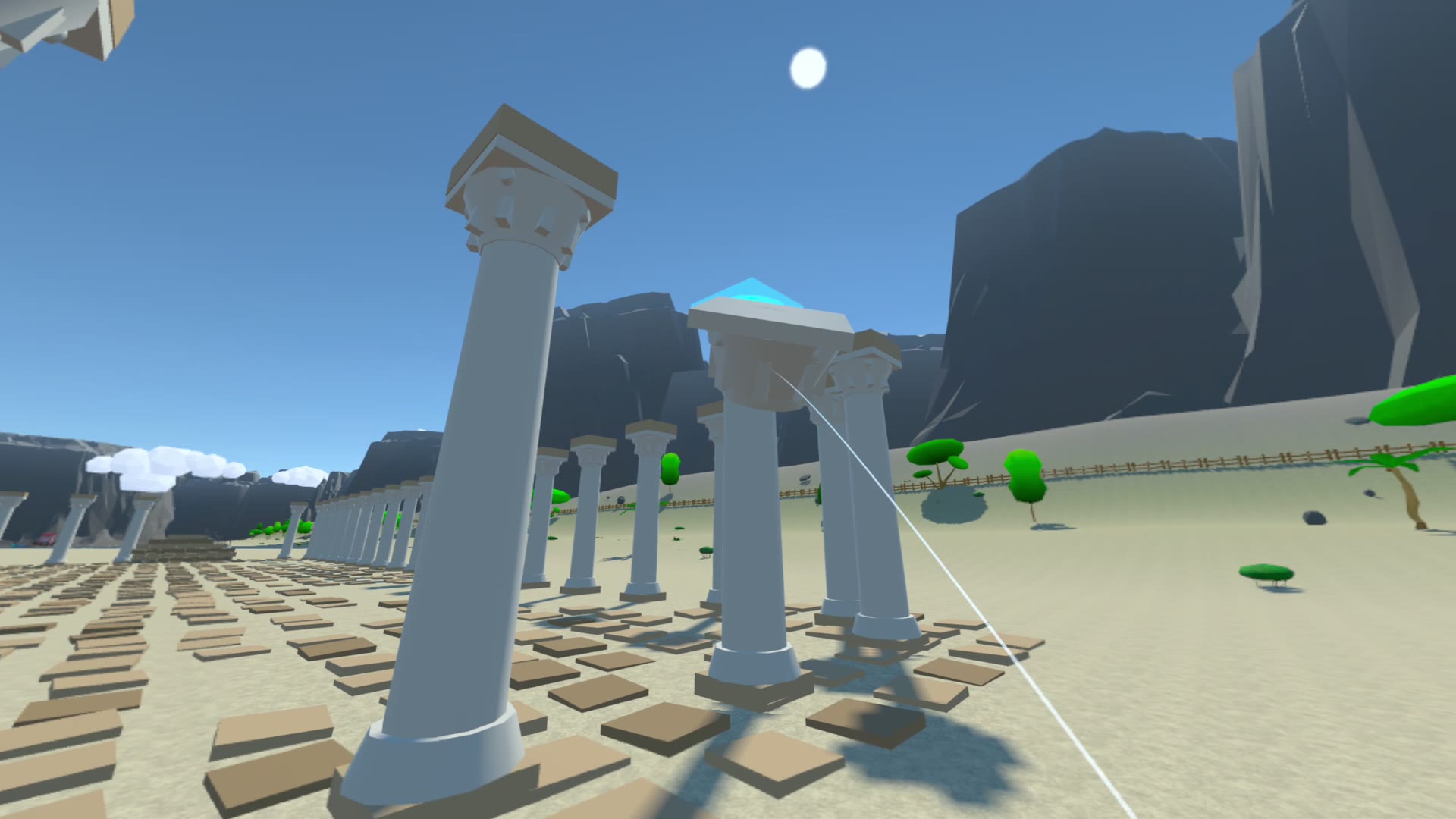
An Atlantic shore that surrenders its ruins only at low tide.
The Roman town of Baelo Claudia. The tide governs what can be reached, so the site has to be read rather than simply swept.
Getting the history right
These are the details most worth checking before print, because they are the ones the game is built on and the ones an archaeologist or a detectorist will notice first.
- Hoxne, 1992. Eric Lawes was searching for a hammer lost by his tenant farmer, Peter Whatling, when he found the hoard. The hammer was recovered as well and is held with the hoard in the British Museum, Room 49. The game recreates the hammer, and finding it is part of the expedition.
- Coloma, January 1848. James Marshall's find at Sutter's Mill started the California Gold Rush.
- Carcassonne. The fortified city has been UNESCO-listed since 1997.
- Bolonia. The ruins are the Roman town of Baelo Claudia, on the Andalusian coast.
- The detector's target ID scale. Gold and lead deliberately overlap on it, because that is what the ground does to you in reality. Even the better detector cannot call that one — which is the point.
The loop
- Detect — Sweep the coil low and slow. The signal tells you what is down there before you break ground.
- Dig — Pick your spot and put the pickaxe to work. Every hole is a small bet.
- Pan — Take the paydirt to water. Swirl, tilt, and watch the colour settle in the riffle.
- Stow & sell — Fill the pouch, weigh in at the trader, and turn dust into a bankroll.
- Travel — Buy a ticket to the next rush. Five destinations, each seeded by its real history.
What Early Access means here
Five destinations are in the game today, along with the whole loop — detector, pickaxe, pan, sieve, magnet and brush. Kimberley, the Western Australian diamond country, is built and waiting as the first destination to arrive after launch. The full version is working toward twelve destinations and six languages, translated by people rather than by machine. There is a feedback screen inside the game that reaches the developer directly and does not ask who you are.
The developer
Buried Worlds VR was built by Cyril Gaillard, alone, over roughly two years, trading as Bellare Studios in Victoria, Australia. It started with a gold prospecting course in Maryborough, in the Victorian goldfields, which he never quite got over.
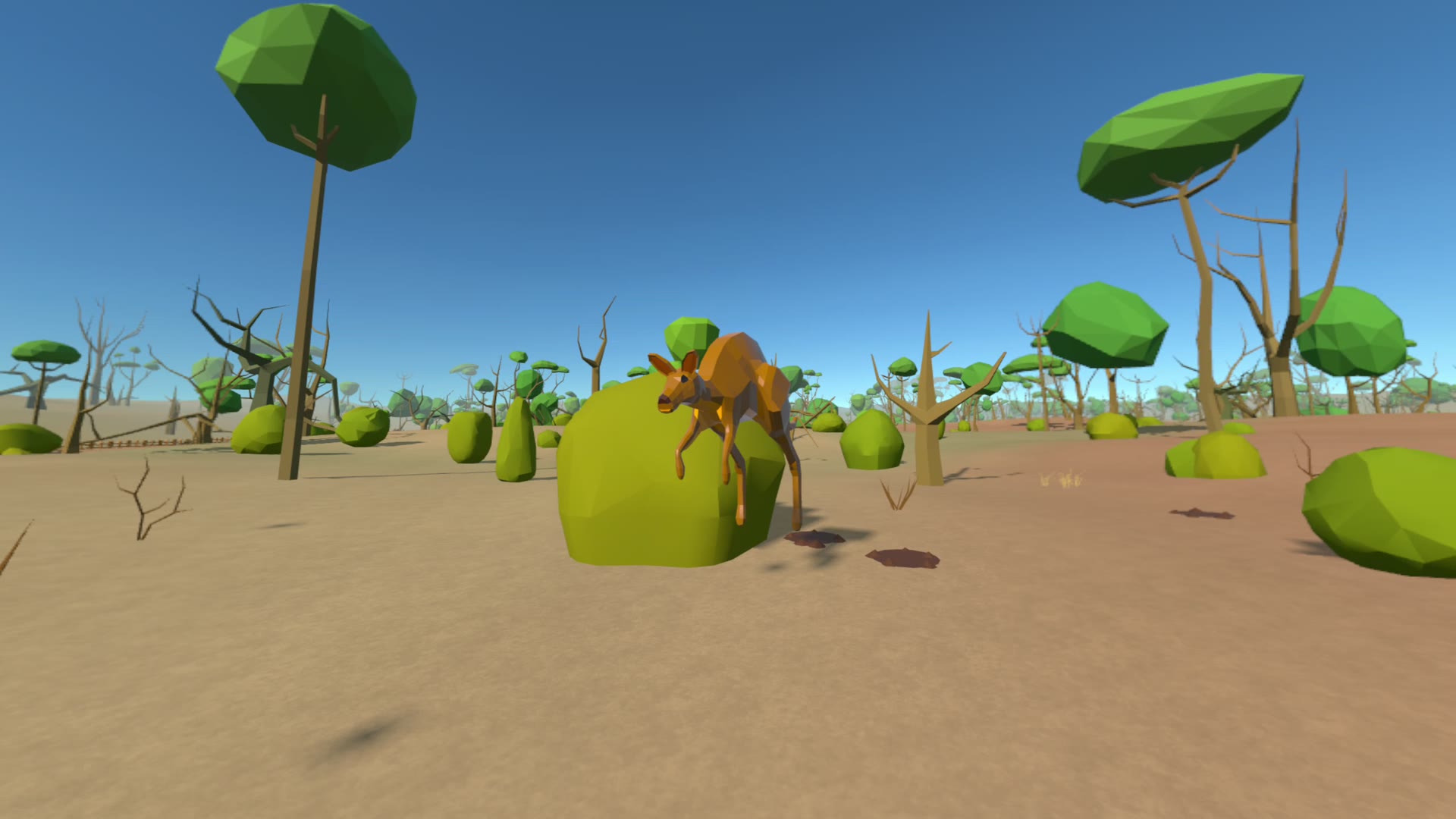
The game is deliberately low-poly and flat-shaded so it holds frame rate on standalone hardware, which is why it runs on Quest 2 as well as the Quest 3 family rather than the newer headsets alone.
Screenshots
Click any image for the full 1920×1080 file.
Logo and art


Trailer
Two minutes, no narration. It covers the loop and four of the five destinations.
A 1080p master is available on request — ask at [email protected].
Contact
Press enquiries, review codes and interview requests go to [email protected]. Review codes are given with no conditions attached to what you say about the game.
For anything less formal, the developer is on Discord most days.
Using these assets
The screenshots, key art, logo and trailer on this page may be used freely in reviews, previews, news coverage, videos and streams of Buried Worlds VR, including monetised ones. No permission needed and no need to ask first. Please do not alter the logo or present the artwork as your own work.