Gold panning in VR: the pan, the sluice and the puddling machine
Three real ways of getting gold out of dirt, each one worked with your hands.
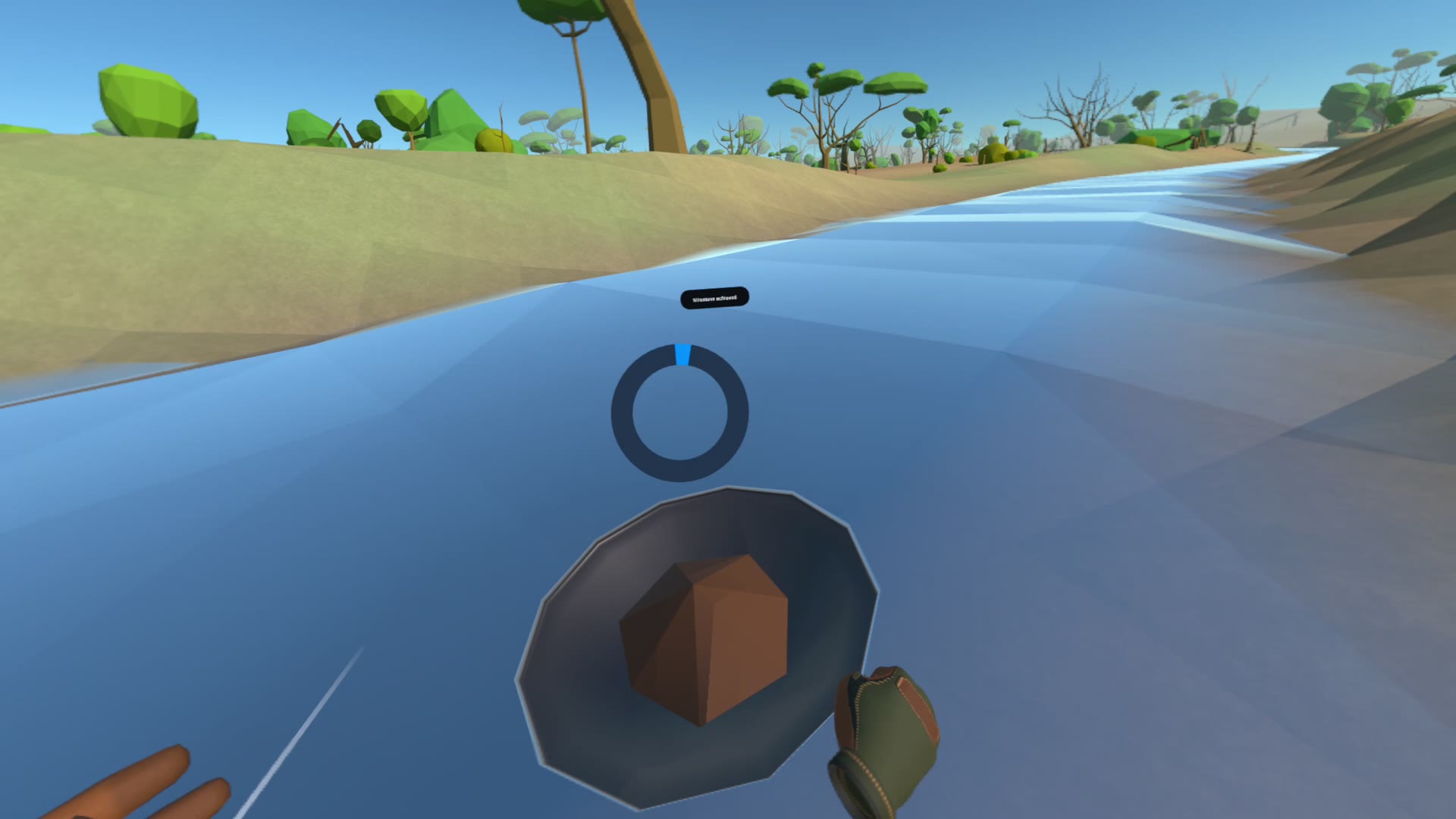
Panning
Ballarat is the only destination that sells the gold pan and shovel, and the only one that teaches panning. Golden chevrons lead you to the river station. Dip the shovel for a clod of dirt, tip it into the pan, hold the pan level at the surface of the water and swirl.
The mound washes down and, if there is anything in it, a nugget settles out. Swirl too fast and the gold goes with the gravel — a warning colour on the ring and a buzz in your hand, never a hard stop. Panning is repeatable forever, which is why Ballarat is the place a stuck prospector comes back to, and why it is the one destination that can fund the whole map on its own.
Sluicing
The sluice box is sold at Coloma, and only there, for $200, bought once. It seats itself in the American River with the hopper upstream and does the work you would otherwise do by hand in the pan. Shovel dirt into the hopper, let the river run through, and pick up what drops at the discharge.
It is easier and more productive than panning by design. Where Ballarat is about learning, Coloma is about output — the destination where the river gets a machine and money starts buying access to ground.
The puddling machine
An abandoned colonial puddling machine sits idle in the Ballarat diggings — the horse-driven trench-and-harrow rig that Victorian miners used to break clay and free the gold in it. Restoring it is Ballarat’s expedition.
- Repair — Three parts are missing and lying loose in the world. Each leaves a pulsing silhouette where it belongs. Find them, carry them back, push them home.
- Commissioning — The third part goes in and the machine comes back to life: a groan of old timber, the boom dragging its harrow around the trench for the first time in sixty years.
- Working it — Bed the trench with clay from the pile, water it, push the swingletree around the centre post. The machine follows your hand. Gold comes up out of the trench.
The real techniques
All three are real. Panning is the oldest — a shallow dish, water, and the fact that gold is heavier than everything around it. The sluice box scales the same principle up: water carries the light material over riffles that trap the heavy. Puddling machines were a Victorian-goldfields answer to clay too stiff to wash: a horse walked a circle, dragging harrows through a flooded trench until the clay broke down and the gold dropped out.
The game’s developer took a gold prospecting course before building any of this, and the pan’s behaviour — the swirl speed, the way gold washes out if you hurry — comes from that rather than from other games.
Where to start
- Ballarat, AustraliaPan and puddle. Open from the start.
- Coloma, CaliforniaSluice and blast. Unlocks at 1,000.
Read next
- The detectorHow the signal works, and the loop around it.
- How the game worksUnlock order, the travel hub, the marketplace.